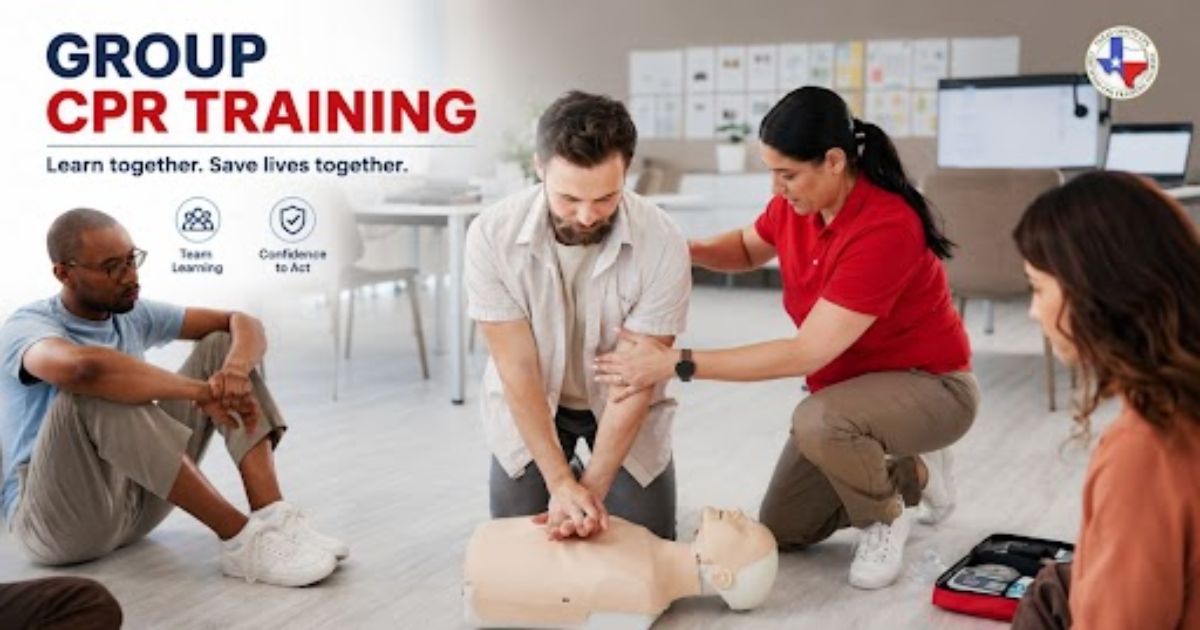
Quick Overview: This blog explains why CPR training is important in schools for emergency preparedness. It highlights how CPR group training in Texas helps teachers and staff respond quickly during medical emergencies. It also covers training benefits, AED use, and how schools can build safer environments through structured, hands-on CPR sessions for better readiness and teamwork.
Schools are busy places filled with classes, sports, events, and daily movement. Most of the day feels normal, but emergencies can still happen without any warning. A student may suddenly collapse. A staff member might need urgent help. In those moments, even a short delay can make things worse.
This is why CPR training has become an important part of school safety planning. Programs like group CPR training Texas help teachers and staff build confidence, act quickly, and follow the right steps when every second matters during a real emergency.
Why CPR Skills Matter in School Emergencies
Medical emergencies in schools are rare, but they can be serious. Sudden cardiac arrest, choking, asthma attacks, or injury-related breathing issues can happen at any time. In such cases, every second counts.
CPR helps keep blood and oxygen flowing when a person stops breathing or their heart stops. It does not fix the cause, but it helps keep the person alive until help arrives.
In a school setting, CPR-trained staff can:
- Respond immediately when a student collapses
- Start chest compressions without delay
- Help maintain oxygen flow to the brain
- Support the person until emergency teams arrive
Even a few minutes of delay can affect recovery. That is why CPR readiness is so important in schools.
Building Safer Schools with CPR Group Training Texas
School environments are busy. Teachers, coaches, and staff handle many responsibilities at once. That is why training the whole team together is more effective. CPR group training programs help schools train multiple staff members at the same time. This makes emergency preparedness easier to manage.
Group training helps schools:
- Train entire staff in one session
- Improve response coordination
- Build confidence across teams
- Create a shared emergency plan
When everyone learns the same steps, response during emergencies becomes faster and more organized.
Teachers are often first on the scene during school emergencies. With group training, they can act without confusion and support each other until medical help arrives.
What Schools Learn in CPR Training Programs
CPR training in schools is designed to be simple and practical. It focuses on real-life situations that may happen on campus. During professional CPR training programs, school staff usually learn:
- How to check if a person is responsive
- How to call emergency services quickly
- How to perform chest compressions correctly
- How to give rescue breaths if needed
- How to help during choking emergencies
- Basic use of an AED device
Training also includes practice using mannequins. This helps staff build muscle memory. In real emergencies, there is no time to read instructions. Staff must act quickly and confidently. Practice helps reduce panic and hesitation.
CPR Group Training Texas for Teachers and Staff
Schools are full of different roles. Teachers, office staff, coaches, bus drivers, and support staff all play a part in safety. That is why CPR group training Texas is useful for all staff members, not just medical personnel.
Group training helps:
- Teachers respond during classroom emergencies
- Coaches act quickly during sports incidents
- Office staff support emergency communication
- School teams coordinate during urgent situations
When more people are trained, response time improves. Someone is always nearby who knows what to do. This creates a stronger safety net for students and staff.
AED Use in School Emergency Response
Many schools now have AED devices on campus. These devices are simple to use but require basic training.
AEDs help restart a normal heart rhythm during cardiac arrest. They are designed to guide users step by step with voice instructions.
In training, school staff learn how to:
- Turn on the AED quickly
- Place pads correctly on the chest
- Follow voice prompts carefully
- Make sure no one touches the person during shock delivery
- Continue CPR after AED use
AEDs are safe to use, even by non-medical staff. But training helps reduce hesitation during real emergencies.
Why Group Training Works Better in Schools
Training individuals is helpful, but group training is more effective for schools. Emergencies in schools involve teams, not just one person.
That is why many schools prefer structured programs like CPR group training Texas.
Group training improves:
- Team communication
- Role clarity during emergencies
- Confidence under pressure
- Faster decision-making
When staff train together, they understand how to support each other. This reduces confusion during real incidents.
Texas OnSite CPR and School Safety Training
Many schools and educational institutions work with Texas OnSite CPR to organize training sessions for their staff. We focus on simple, practical learning that fits school environments. Training is designed for teachers and staff with different experience levels.
Sessions are structured to include:
- CPR for adults and children
- AED training and practice
- Choking response techniques
- Emergency action planning
- Hands-on practice with real scenarios
We also offer on-site training at schools. Learning in a familiar place helps staff understand emergency steps better. The aim is to build strong confidence so they can act without delay when needed.
Emergency Preparedness Beyond Training
CPR training is only one part of school safety. A strong emergency plan includes more than just skills.
Schools should also focus on:
- Clear emergency procedures
- Regular safety drills
- Accessible AED placement
- Updated emergency contact lists
- Communication plans for staff and parents
When CPR training is combined with planning, schools become much safer environments. Prepared staff can reduce panic and guide students during emergencies.
How CPR Training Improves Student Safety
Students depend on adults to act quickly during emergencies. CPR-trained staff can make a real difference in survival outcomes.
With proper training, school staff can:
- Respond immediately to cardiac emergencies
- Reduce risk of brain damage from oxygen loss
- Keep students stable until medical help arrives
- Improve survival chances significantly
Even a short delay can impact recovery. That is why CPR readiness is so important in schools.
Keeping Skills Fresh with Regular Training
CPR skills are not something learned once and then forgotten. They need regular practice to stay sharp. Most certifications are valid for a limited time, so renewal is required. Schools also arrange refresher sessions to keep staff updated and confident.
Regular training helps improve response speed, refresh correct steps, and maintain confidence during emergencies. It also keeps teams better prepared to handle real situations without confusion. Even experienced staff benefit from practice, as skills can fade over time if they are not used regularly.
Book School CPR Group Training Now
No school can predict when an emergency will happen. But every school can prepare for it. CPR training gives staff the skills to act quickly and provide life-saving support until medical help arrives.
That is why CPR group training Texas plays an important role in building safer school environments. It helps entire teams learn together, respond faster, and stay more confident during real situations.
Texas OnSite CPR helps schools prepare staff with simple, hands-on training designed for real campus needs. Connect today to explore training options and book a session for your school or team.
FAQs
Q1:Why is CPR training important in schools?
CPR training helps school staff respond quickly during emergencies like cardiac arrest or choking. It improves survival chances and reduces panic during critical situations.
Q2:Who should take CPR training in schools?
Teachers, office staff, coaches, bus drivers, and support staff should take CPR training. Anyone working in a school can help during emergencies with proper training.
Q3:How often should school CPR training be renewed?
CPR certification is typically valid for two years. Schools should schedule refresher training to keep staff updated, confident, and prepared for emergencies.
Q4:Can CPR training be done at school?
Yes, Texas OnSite CPR offers on-site CPR training for schools. This allows staff to learn in a familiar environment and better understand emergency response procedures.
Q5:Why is group training better than individual training?
Group training strengthens teamwork and communication. It ensures all staff members learn the same emergency response steps and can work together effectively during critical situations.


BLS Provider CPR Classes for Individuals at our 3 Locations
George Brown
All of our staff are now trained in CPR. We now have the highest safety standards in our industry in Texas.
~ G-tech Industrial
Texas OnSite CPR
Text or Call: 817-992-0585
Email: cprtom@mac.com
Contact Us Texas OnSite CPR © 2026.Nancy Stetson
To have our training onSite made it so much easier to get all of our employees trained in CPR.
~ Buffalo Ranch